
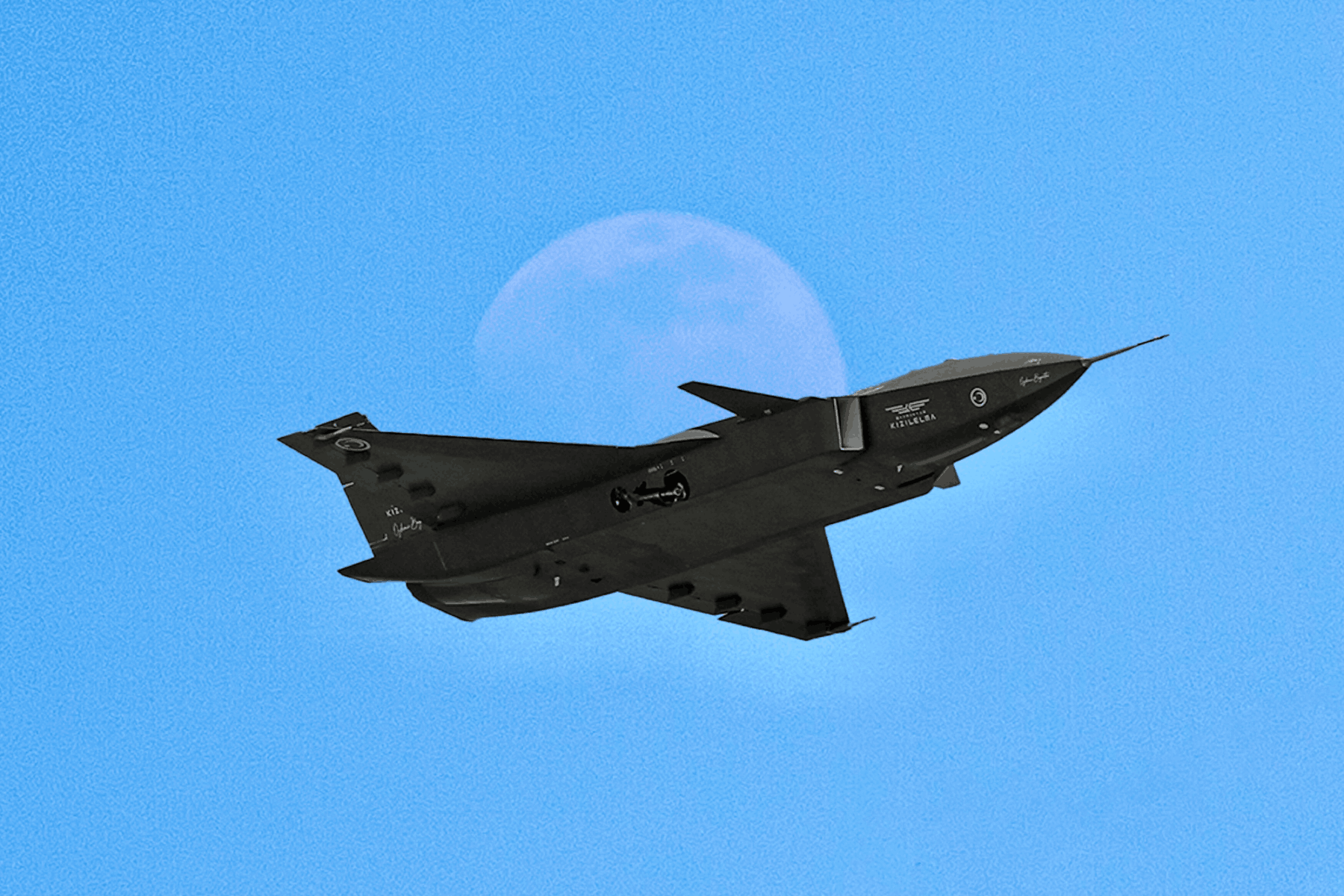
KIZILELMA, Türkiye’s first unmanned fighter jet, developed indigenously by Baykar through work carried out entirely with its own resources, has crossed yet another historic threshold. Test and training activities conducted under the program have reached a total of 600 sorties to date. The first three KIZILELMA aircraft, having successfully completed their acceptance tests, were delivered to the security forces on November 19, 2026. With this delivery, Türkiye has earned the distinction of becoming the first country in global aviation history to induct an unmanned fighter jet into its inventory. KIZILELMA—the greatest dream Baykar has pursued since taking its first step in unmanned aerial vehicle technologies—entered active service upon delivery.
Making world history in air-to-air combat
KIZILELMA completed its first firing tests with TOLUN and TEBER-82 munitions on October 8, 2025. On November 17, 2025, another critical threshold was crossed with the integration of the TOYGUN Electro-Optical Targeting System. In a historic test conducted off the coast of Sinop on November 29, 2025, KIZILELMA scored a direct hit on a jet-powered target aircraft designated by ASELSAN’s MURAD AESA radar, using the GÖKDOĞAN beyond-visual-range (BVR) air-to-air missile developed by TÜBİTAK SAGE. With this achievement, KIZILELMA went down in history as the world’s first unmanned fighter jet to strike a jet-powered aerial target with a beyond-visual-range air-to-air missile. On December 27, 2025, the platform achieved yet another first: a close formation flight performed by two KIZILELMA aircraft using intelligent fleet autonomy demonstrated the platform’s swarm autonomy capability.
Süpersonic missile and firing from the internal weapons bay
The autonomous formation flight that KIZILELMA conducted alongside Italian M-346 aircraft on May 20, 2026, marked an important step in the manned-unmanned joint operations concept. Having struck its target with a direct hit using the JET-230 supersonic missile on July 13, 2026, the indigenous unmanned fighter jet successfully conducted its first firing tests with TEBER-82 and TOLUN munitions from its internal weapons bay—one of the most critical elements of low-observability capability—later that same month.