
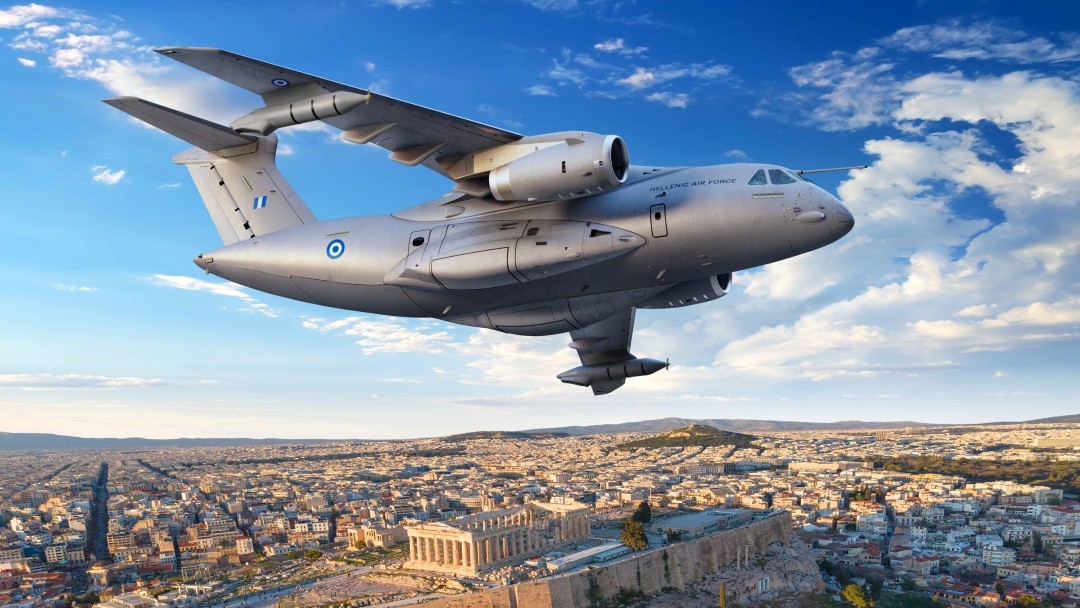
The Hellenic Air Force is scheduled to receive its first KC-390 Millennium in 2027. This acquisition program will significantly enhance Greece's strategic airlift and air-to-air refueling (AAR) capabilities while maximizing interoperability with NATO and allied forces. Furthermore, the program will enable the Hellenic Armed Forces to leverage European-based training, maintenance, and logistics infrastructure to the fullest extent possible.
Commenting on the contract, Bosco Da Costa Junior, President and CEO of Embraer Defense & Security, stated:
"We are honored by Greece’s selection of the KC-390 Millennium. This choice is a concrete testament to the strong trust that leading NATO members place in our platform. This critical milestone further solidifies the aircraft’s position as the benchmark solution for military airlift among allied forces. The KC-390’s proven combat performance, high dispatch reliability, and optimized cost-effectiveness make it the ideal choice for nations seeking to future-proof their operational capabilities."
Europe Embraces the KC-390: Greece becomes the seventh user
Greece is the seventh European country to select the KC-390, following Portugal, Hungary, the Netherlands, Austria, the Czech Republic, and Sweden.
Beyond the European market, the KC-390 Millennium has also been selected by the air forces of Brazil, South Korea, Uzbekistan, the United Arab Emirates, and Colombia. Offering seamless interoperability, exceptional performance, flexibility, and a high operational radius, this next-generation multi-role aircraft directly contributes to the operational capacities of air forces on a global scale.
Technical and tactical capabilities of the KC-390 Millennium
Designed in accordance with 21st-century warfare concepts, the KC-390 Millennium delivers flawless integration in joint and coalition operations through its advanced avionics and communication systems, modern digital architecture, and "interoperability by design" philosophy.
When compared to other medium-sized military transport aircraft in its class, its key technical advantages include a maximum payload capacity of up to 26 metric tons and a cruising speed of 470 knots. Capable of operating from unpaved and semi-prepared temporary strips, the aircraft boasts a versatile mission profile encompassing cargo and troop transport, personnel and cargo airdrop, medical evacuation (MEDEVAC), search and rescue (SAR), firefighting, and humanitarian assistance missions.
Additionally, thanks to its rapidly reconfigurable air-to-air refueling system, the aircraft is capable of operating in both tanker and receiver configurations.