
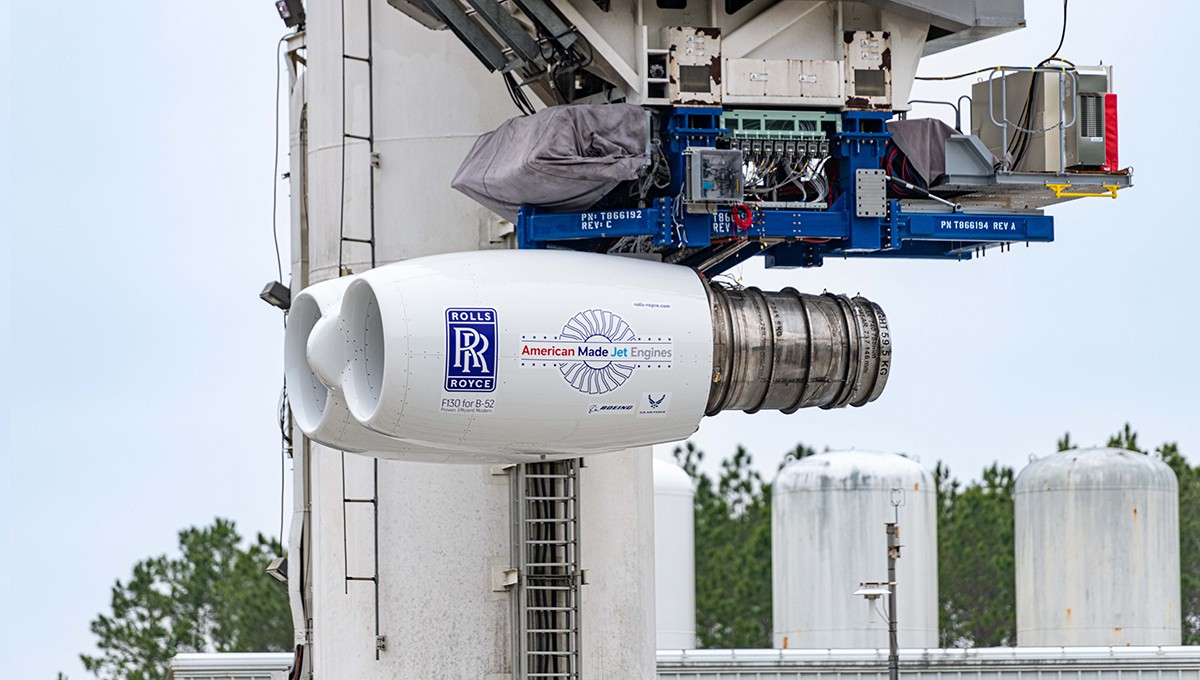
Representing the company’s largest capital outlay in U.S. history, the decade-long modernization project is viewed as a critical milestone in Washington’s strategy to strengthen the defense industrial base.
The project encompasses the modernization of advanced manufacturing infrastructure at the Indianapolis campus, the establishment of new ground-test facilities, and a new altitude testing plant in West Lafayette.
Adam Riddle, President of Rolls-Royce North America Defense and CEO of North America, commented on the investment:
“This billion-dollar investment represents much more than buildings and test cells. It demonstrates our commitment to delivering the power U.S. military personnel need, on time, and to the standards our customers expect. We took this step because it is the right move for U.S. national security and the future of Rolls-Royce.”
Powering Critical Military Platforms
The Indiana facilities will handle engine production and testing for numerous critical platforms, notably the U.S. Air Force’s B-52 strategic bombers and the U.S. Army’s MV-75 Cheyenne program. The campus also supports engine operations for the V-22 Osprey, the U.S. Navy’s MQ-25A Stingray unmanned refueling aircraft, and C-130J Super Hercules transport planes.
According to company data, Indianapolis serves as the world’s largest manufacturing hub for Rolls-Royce defense products. Employing approximately 3,500 people represented by the United Auto Workers (UAW) union, the operations also support thousands of indirect supply chain jobs across the state.
Economic Impact and Supply Chain Resilience
Highlighting the strategic importance of the investment to the U.S. defense sector, Indiana Senator Jim Banks stated:
“The engines built in Indianapolis power the aircraft our service members rely on. This investment strengthens the American defense industrial base at a time when we need it most.”
Over the past decade, Rolls-Royce has invested more than $1.5 billion in its U.S. facilities and nearly $2.5 billion in research and development. The company reported that its American operations contributed $6.2 billion to the national economy in 2024, supporting over 30,000 jobs across 26 states, including research spillover effects.
The Indianapolis campus also hosts LibertyWorks, an advanced propulsion research center supported by a 10-year, $75 million collaboration agreement with Purdue University.