
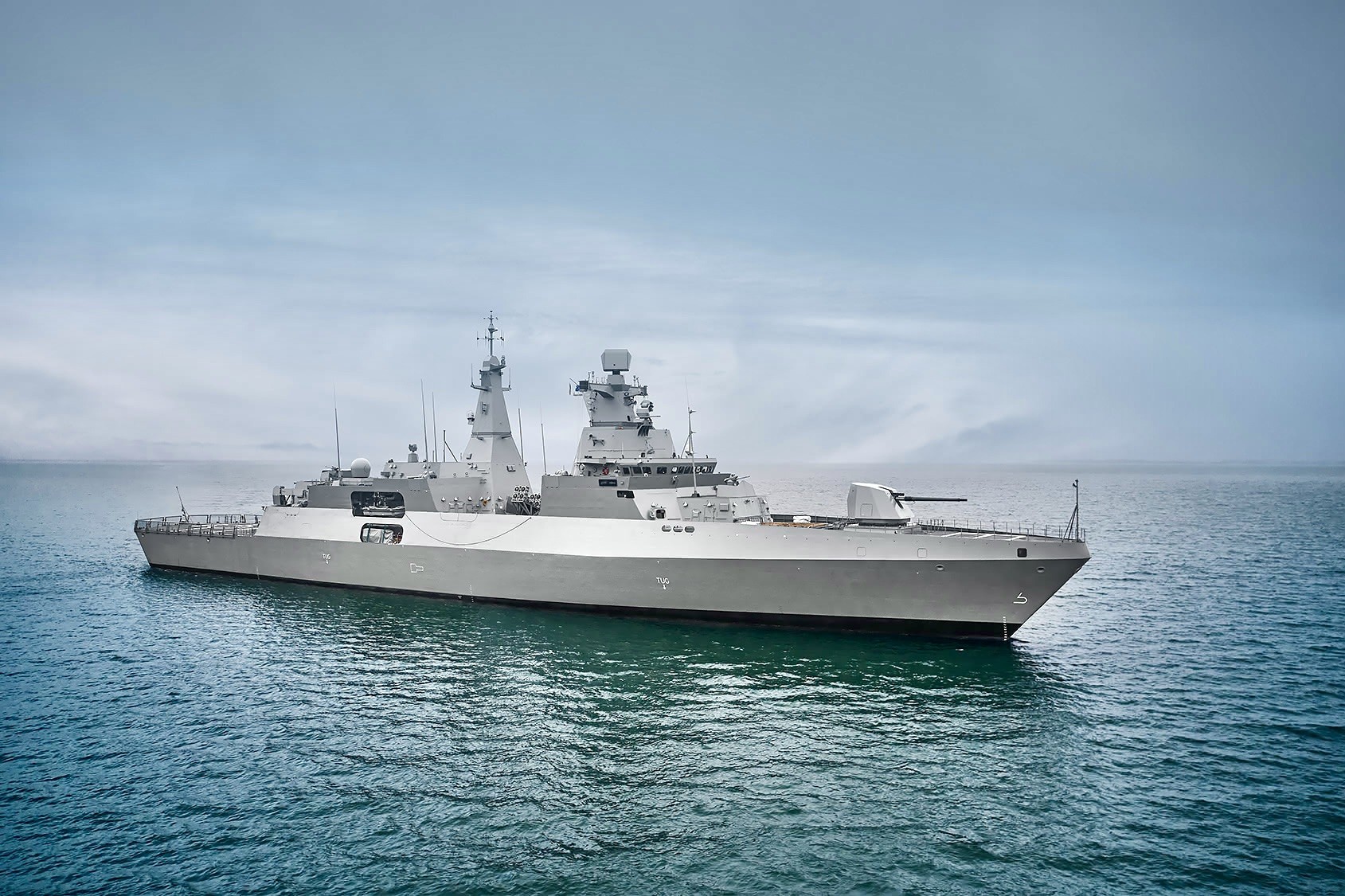
Signed on November 17, 2026, with the Federal Office of Bundeswehr Equipment, Information Technology and In-Service Support (BAAINBw), the second-phase procurement contract entered into force following approval by the Bundestag Budget Committee in October. According to industry reports, the estimated value of this second batch exceeds €5 billion.
Germany is moving to bridge capability gaps in its surface fleet following the decision to cancel the F126 frigate program, which had become mired in controversy due to chronic delays and cost overruns. Expanding the existing MEKO A-200 order enables Berlin to maintain its fleet renewal schedule and fulfill its NATO commitments, while allowing TKMS to leverage the shipyard infrastructure, production workflows, and supply chains already established for the initial four vessels.
BAAINBw announced that all budgetary approval processes have been finalized and that construction preparations will commence in the coming months. While the hull numbers and names of the new vessels have yet to be disclosed, the first frigate is scheduled for delivery to the German Navy in December 2029.
Featuring a modular design, the MEKO A-200 stands out as a multi-role surface combatant—capable of anti-air, anti-surface, anti-submarine, and electronic warfare—with an approximate length of 121 meters and a displacement of 3,950 tons. Powered by a CODAG-WARP propulsion system, the platform can reach speeds exceeding 29 knots and offers an operational range of over 6,500 nautical miles, making it well-suited for sustained deployments.
Accommodating a crew of approximately 125 personnel, the vessel is capable of conducting operations with both helicopters and unmanned aerial vehicles (UAVs). Engineered with reduced radar, acoustic, and infrared signatures, the platform is specifically optimized for anti-submarine warfare (ASW) missions. Its modular architecture allows for the seamless integration of diverse weapons and sensor suites, including vertical launching systems (VLS), anti-ship missiles, and advanced sonar arrays.
Africa’s choice: German naval engineering
German-designed MEKO A-200-class frigates have become a prominent fixture in the inventories of African nations seeking to modernize their regional naval power.
South Africa, the first nation on the continent to adopt the platform, continues to conduct naval operations with four MEKO A-200 frigates inducted into service between 2006 and 2007. Following South Africa’s lead in strengthening its naval capabilities, Algeria officially commissioned two warships of the same class during the 2016–2017 period.
Seeking to bolster its strategic footprint in the Eastern Mediterranean and the Red Sea, Egypt also selected the same platform, placing an order for a total of four MEKO A-200 frigates. While the vessels built for the Egyptian Navy began entering service in 2022–2023, construction of the fourth and final ship in the series remains underway.